ELECTRONICS WORKSHOPS FOR EVERYONE
Did you know the CEOs of Tesla, Apple, and Microsoft all started by tinkering with circuits? Electronics is the language of the modern world—and it's simpler than you think. Whether you are 8 or 80, these hands-on courses will take you from "How does that work?" to "I built that myself!" in just three hours.
No math degree. No prior experience. Just curiosity and a willingness to play. Each course follows a clear path:
Learn the Theory → Practice with Components → Build Your Project.
(Ages 8 to 80). RECOMMENDED 10+
"You are never too young to start, and never too old to learn."
STUDENTS AND SENIORS GET
50% DISCOUNT
PS: SCHOOL STUDENTS (Ages 8 to 19 years old) AND SENIORS (over 55 years old) RECEIVE 50% OFF. SIMPLY SELECT THE DISCOUNTED WORKSHOPS. NB THE DISCOUNT APPLIES TO WORKSHOPS ONLY. THE DISCOUNT DOES NOT APPLY TO ELECTRONICS KITS.
PPS: This website accepts payment by Cards, Klarna and Paypal. If you wish to pay via EFT Bank Transfer, please email us on p_s@tpg.com.au and we’ll send you a Manual Order form. Otherwise, please proceed to the ‘Enrol’ Page.
DETAILS
Duration
These intensive 3-hour crash courses blend just the right amount of theory with hands-on practical work. We keep the theory concise and relevant for effective learning and building time. Every circuit is constructed safely on a breadboard—no soldering required. Analog and digital projects are battery-powered, while the microcontroller project runs via standard 5V USB for reliable, low-voltage operation. Workshops are only held in Sydney at this stage.
Course Kits
Participants who wish to take their kits with them can purchase them at discounted prices.
Analog Kit: $15 - includes 1× 400 point Breadboard, 2 x Timer IC, 1 x OPAMP IC, 9 X LEDs, 4 X Capacitors, 9 X Resistors, 1 X Jumper Wires Bundle, 1× 9V Battery Adapter, 1x Push Switch
Digital Kit: $20 - includes 1× 830 point Breadboard, 1x BB Power Module, 2 × 4p Dip Switches, 2 x Adder IC, 3 x Logic Gates ICs, 9 x LEDs, 19 x Resistors, 1 x Jumper Wires Bundle, 2 x Push Switches, 1× 9V Battery Adapter, 4 x Transistors.
Microcontroller Kit: $20 - 1× 830 point Breadboard, 1x Arduino Nano, 1x OLED display, 1x Distance Sensor, 3 x LEDs, 3 x Resistors, 1x Buzzer, 1 x Jumper Wires Bundle.
Advanced Kit: $50 - Includes 830 pieces Electronics Kit plus 1 × 400 point Breadboard, 2 x Timer IC, 1 x OPAMP, 2 x Adder IC, 2 × 4p Dip Switches, 3 x Push Switches, 3 x Logic Gates ICs, 2 × 9V Battery Adapters, 1 x Capacitor, 1 x Arduino Nano, 1 x Distance Sensor, 1 x OLED display.
Each kit contains all the components used in your workshop—perfect for practice, experimentation, and further exploration. NB: There may be slight variations in supplied kit components from the pics. Also note, these kits are available to purchase by Participants only and will be handed to Participants on the workshop date, not shipped.
Course Path
These courses are designed to be taken in sequence: Analog → Digital → Micro-controllers. Each course builds upon the skills learned in the previous one, giving you a complete foundation in electronics from the ground up. However, if you have prior experience, you're welcome to join any course individually!
Who Is This For?
Kids (8+): Perfect for STEM programs. Recommended 10+
High School Students: considering Electronics/Electrical studies after graduation
Parents & Grandparents: A fantastic bonding experience
Beginners: No experience required.
Tinkerers: Finally understand how things work in this Technology/AI age.
Class Size
Classes limited to 50 Participants (exceptions apply). Limited seats so please book early
Analog Electronics
The Language of Nature
What You'll Learn
Theory: Voltage, current, resistance, and Ohm's Law. Introduction to KCL & KVL (Kirchhoff's Laws). How electricity flows through circuits.
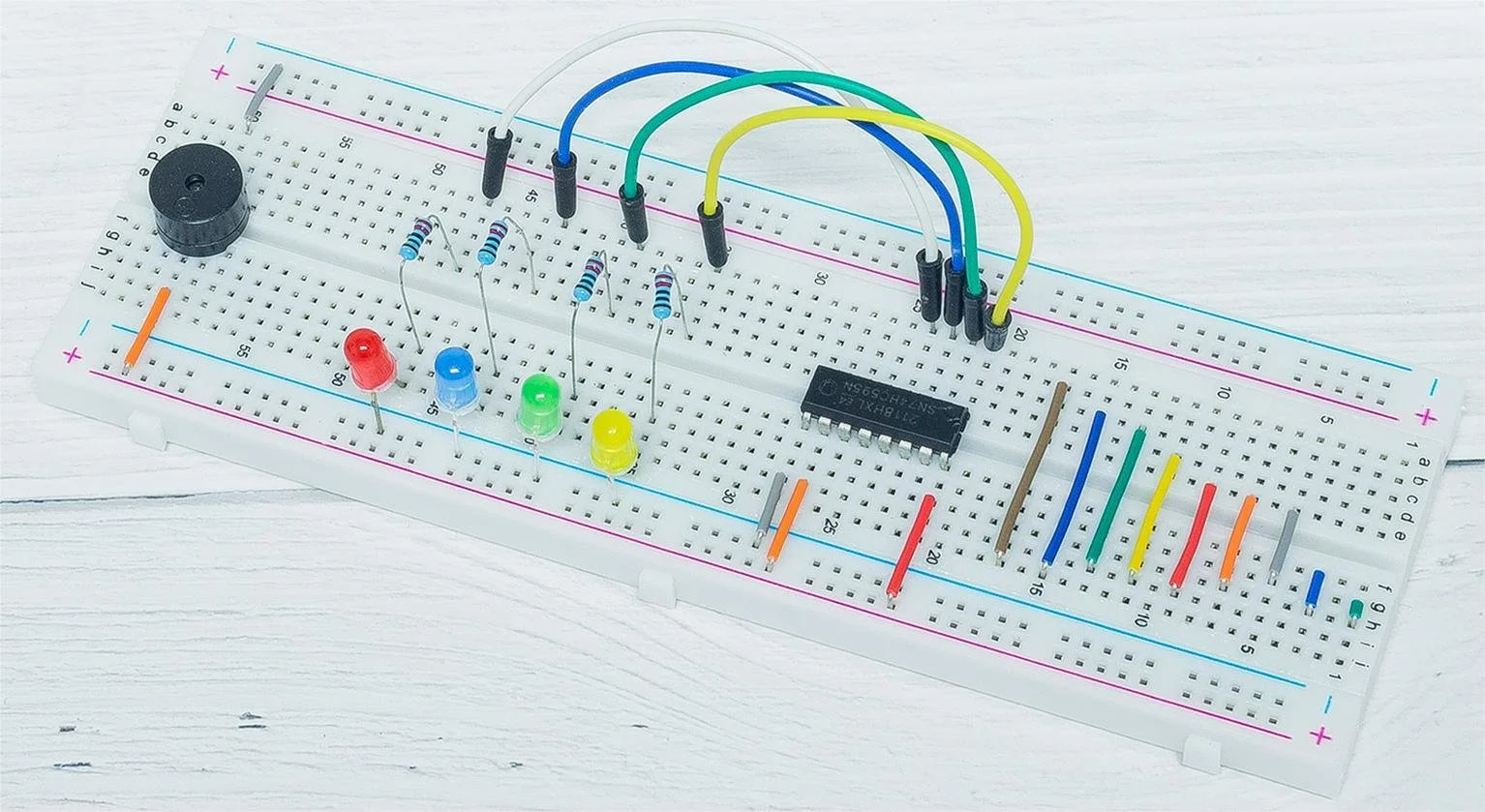
Build-Up Skills: Get hands-on with resistors, capacitors, LEDs. Learn to use a breadboard like a pro. Master the legendary 555 Timer IC—the Swiss Army knife of analog electronics.
Final Project(Your Choice)
Option A:Traffic Light Simulator – Build a Red-Amber-Green sequence controller using the 555 timer and LEDs. Master timing, oscillation, and sequencing.
Option B:Police Flashing Lights – Create alternating flashing LEDs using the 555 timer. See your circuit come alive!
Prerequisites: Basic maths
What to bring: (Scientific) Calculator
Digital Electronics
The World of 1s and 0s
What You'll Learn
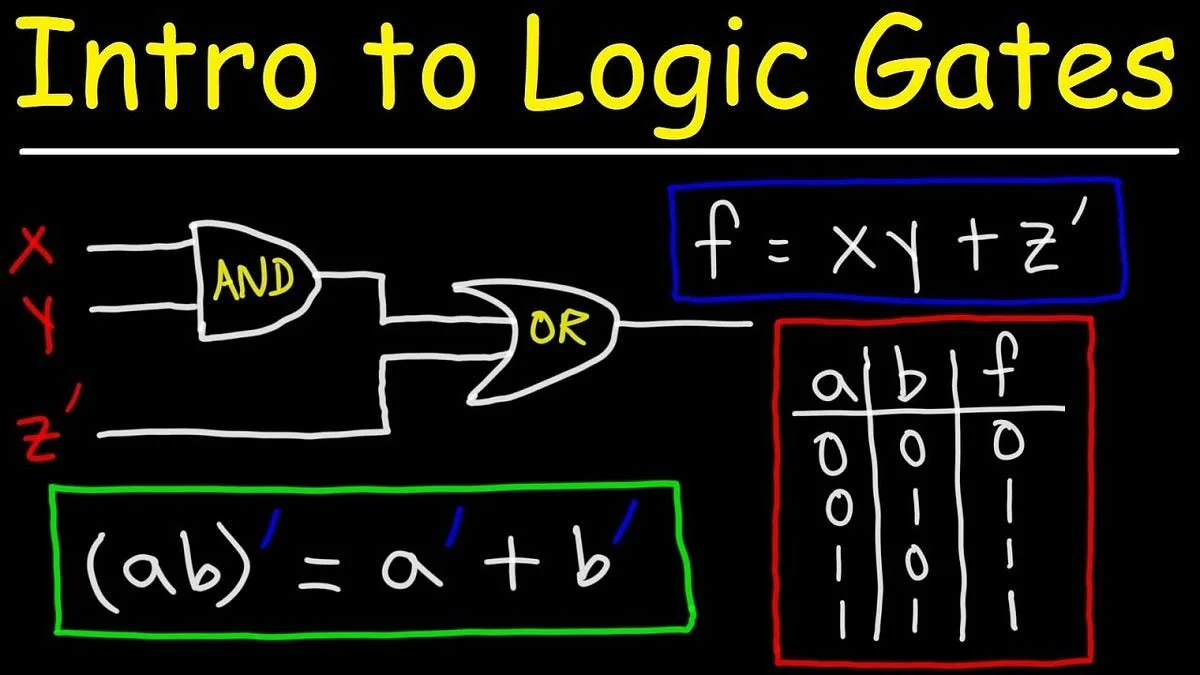
Theory: What is binary? How do computers think? Introduction to Boolean Algebra (AND, OR, NOT, XOR). Learn how true/false logic powers every microprocessor on Earth.
Build-Up Skills: Work with Transistors and individual logic gate ICs on a breadboard. Build simple circuits like a basic AND gate and an OR gate. Understand truth tables and how logic combines to make decisions.
Final Project
The 4-Bit Adder – Using a dedicated adder IC, you'll connect switches to input binary numbers and watch LEDs display the sum. You'll see how logic gates perform real arithmetic—the foundation of every calculator and computer!
Prerequisites: Basic maths and Analog Workshop
What to bring: (Scientific) Calculator
Working with Micro-controllers
The Brains
What You'll Learn
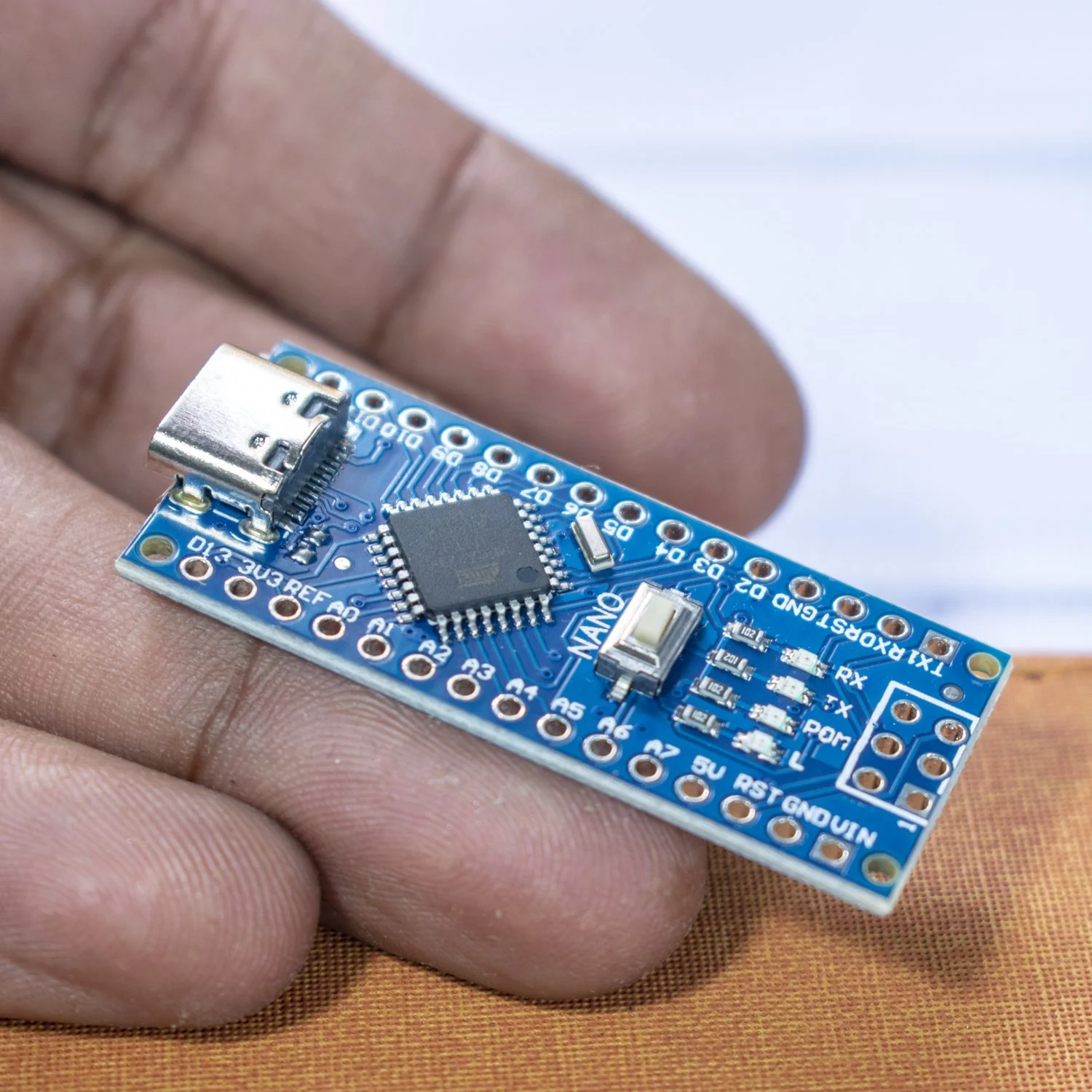
Theory: What is a microcontroller (MCU)? How does it differ from a CPU & GPU? Introduction to sensors, actuators, and the magic of code.
Build-Up Skills: Hands on with the Arduino code! Learn about digital input/output, PWM (for controlling brightness, speed or sound), and how to read sensor data. Interface with an OLED display and a piezo buzzer.
Final Project
The Smart Distance Sensor – Develop and Download pre-explained code to an MCU. Wire up an ultrasonic sensor, an OLED display, LEDs, and a buzzer to an Arduino. The code will measure distance, display it on the OLED, change LED colors based on proximity, and make the buzzer beep faster as objects get closer. You'll walk away with a working "reverse parking sensor" you built yourself!
Prerequisites: Basic maths and Analog&Digital Workshops. A Laptop with Arduino IDE installed and basic programming knowledge (Pref C++, not essential)
What to bring: (Scientific) Calculator and your Laptop